
How to Search Texas County Court Records
Two public systems carry Texas County District Court cases. The county links searchers to On Demand Court Records (ODCR) as its District Court Records path, and the Oklahoma State Courts Network (OSCN) lists Texas County District Court in its statewide docket search. ODCR is the better starting point for name, party, case-type, and filed-date lookups in this county. OSCN is built for statewide docket research, case-number pulls, daily dockets, daily filings, and District Court traffic citation searches. Because Oklahoma records appear across both depending on county participation and record type, it pays to check each one.
Have a few details ready before you begin. A case number returns the cleanest result, but a last name and first name will work when the number is unknown. A rough filing year or a case type helps when a surname is common. For city tickets, parking, and municipal ordinance offenses, the Guymon Municipal Court keeps a separate record that neither ODCR nor OSCN indexes.
- Pick the court. Use Texas County District Court for county-level criminal, civil, probate, family, small claims, protective order, and District Court traffic filings. Use Guymon Municipal Court for city citations.
- Search by case number when you have it. Oklahoma numbers begin with a case-type prefix and year, such as CF for felony, CM for misdemeanor, CJ for civil, FD for family, PB for probate, SC for small claims, or TR for traffic.
- Search by name if the number is unknown. ODCR expects "Last, First." OSCN takes last, first, and middle names and lets you filter by party role.
- Narrow by date or case type when the name is common. Even in a smaller county, shared surnames and business names can return several matches.
- Read the full docket before drawing a conclusion. The docket shows filings, hearings, orders, and disposition. A filed charge is not the same as a conviction.
- Request certified copies from the Court Clerk. An online docket page does not replace a clerk-authenticated copy.
Texas County Court Records Search Fields
The ODCR search form gives Texas County users a single screen to filter District Court cases. You can leave most fields blank and search on just a name, or combine a court, a case type, and a date range to cut down a long result list. The case-number field is structured, so the prefix, year, and number entries help when you already know the case. The table below lists the fields shown on the public ODCR search page.
| Field Label | Type | Required | Notes / Format |
|---|---|---|---|
| Court group | Dropdown | No | All Courts, Oklahoma District Courts, or Tribal Courts. |
| Court | Dropdown | No | All Courts plus individual courts, including Texas. |
| Party name | Text | No | Last, First format. |
| Party type | Dropdown | No | Plaintiffs & Defendants, or All Parties. |
| Type of case | Dropdown | No | Civil, criminal felony, misdemeanor, domestic, probate, guardianship, marriage license, protective order, search warrant, small claims, traffic, and more. |
| Full case number | Structured text | No | Prefix and code, filing year, number; prefixes include CF, CM, CJ, FD, PB, PO, SC, SW, TR, WL. |
| Filed date range | Date range | No | Limits results to a filing window. |
| Activity date | Date | No | Filters by docket activity. |
ODCR advertises free public search and full docket information for records published by participating courts, with paid access for expanded uses. Its pay page also accepts online payment for fully disposed traffic, felony, misdemeanor, and wildlife cases, and for undisposed traffic citations where a guilty or nolo contendere plea is entered on or before the initial appearance date. Note: paying an undisposed citation online can be treated as a plea, so read the terms before submitting payment.
OSCN Statewide Docket and Citation Search
OSCN runs the statewide side of the search. Its form opens with a County or Court dropdown that includes Texas County District Court and the appellate courts. From there you can search by case number, by last, first, and middle name, by a date-of-birth range, and by party type, which covers roles such as defendant, plaintiff, petitioner, respondent, personal representative, and guardian. You can also limit results by case type and by the dates a case was filed or closed. OSCN offers a District Court citation search as well, though the system warns that it does not search municipal citations.
The docket page also publishes ready-made reports. These include civil cases with trial dispositions, several daily docket views by judge, event, and case type, and a daily filings list by county. When a court filing involves sensitive data, the Oklahoma e-filing portal posts a Rule 31 warning that filers must protect personal identifiers, because documents can become public as filed unless a court protects them.
The county-linked online systems give a clear window into the public docket and how a case has moved over time.
For the deepest reads, follow each case to its Texas County court dockets, where every filing and hearing is logged in order.
To see the e-filing portal and its public-access notice, visit the Oklahoma court e-filing system.
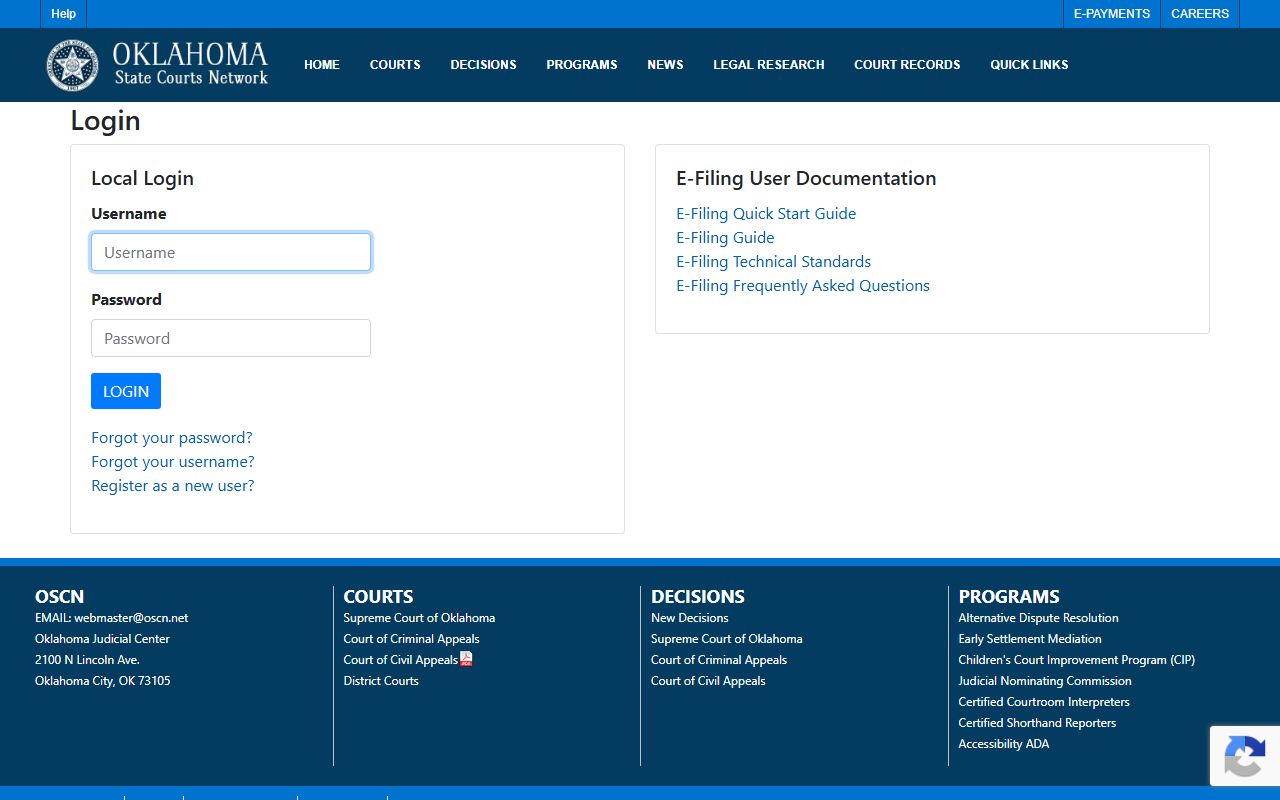
The portal handles electronic submissions for attorneys and self-represented filers, and the same warning applies to anything entered into a case file.
Types of Texas County Court Records
The Texas County District Court is a court of general jurisdiction, so its record set is broad. The Court Clerk keeps the permanent file for each division, including civil, criminal, probate, juvenile, domestic relations, and small claims. Land instruments such as deeds, mortgages, and liens are a separate matter handled by the County Clerk, not by the court.
Different case types produce different files, and the public access rules shift with the category. The common record types in this county include:
- Civil records: petitions, answers, motions, journal entries, judgments, garnishments, and releases in money, contract, property, and foreclosure suits.
- Criminal records: charging instruments, bond entries, arraignment, plea, hearing minutes, disposition, and sentence for felony and misdemeanor cases.
- Family and domestic records: divorce, custody, paternity, and child support, with minors' details and financial identifiers redacted.
- Probate records: wills, letters testamentary, guardianship pleadings, inventories, creditor claims, and final decrees through the Probate Division of the District Court.
- Small claims: affidavits, notices, hearing dates, judgments, and satisfaction entries for lower-dollar disputes.
- Traffic and protective orders: District Court traffic searchable by citation in OSCN, plus protective-order cases with limited access when safety is at issue.
Juvenile, adoption, and mental-health matters are the categories a public searcher should expect to be confidential or absent from the online docket.
What Texas County Court Records Show
A District Court record is more than a verdict line. It is a running history of the case, from the first filing through the last order. Most fields are visible on the public docket, while certified documents and a few protected identifiers stay behind the counter or under redaction. The table below maps the fields a Texas County search result typically returns.
| Field | What It Shows |
|---|---|
| Court and County | Texas County District Court as the originating court. |
| Case Number | Prefix, year, and number, such as CF for felony or FD for family. |
| Filing Date | When the case opened, plus the closed or disposition date. |
| Case Type and Caption | The category and the styled name of the parties. |
| Parties | Plaintiff, defendant, petitioner, respondent, state, estate, and counsel with their roles. |
| Judge | The assigned judge and courtroom. |
| Docket Entries | Petition or information filed, bond, warrant, motions, orders, plea, judgment, and sentence in order. |
| Hearings | Date, time, event type, and judge for each setting. |
| Financials | Court costs, fines, restitution, bonds, and payments. |
| Documents | Some links to filed papers; certified copies still come from the Court Clerk. |
Reading the docket means knowing the shorthand. A short glossary of the terms that appear most often in a Texas County file:
- Disposition
- The final or current outcome of a charge or case.
- Docket
- The chronological list of every filing and event, kept as the appearance docket by the Court Clerk.
- Information
- The prosecutor's formal criminal charge.
- Journal entry
- The formal written record of a court ruling.
- Bench warrant
- A warrant a judge issues for a missed court date or noncompliance.
- Certified copy
- A clerk-authenticated copy accepted for official use.
The deeper criminal file, with charges, pleas, and sentencing, lives in the full Texas County criminal court records.
Public Access Framework for Texas County Court Records
Oklahoma starts from a position of openness. The Oklahoma Open Records Act, found at 51 O.S. § 24A.1 et seq., lets the public inspect and copy the records of a public body unless a specific law makes the record confidential. Section 24A.5 sets the open-versus-confidential rule, and Section 24A.8 governs law enforcement records, where some investigative detail can be held back. Court records can also be restricted by a protective order under Section 24A.29.
To see the full text and section list of the Act, the Oklahoma Department of Libraries hosts the official page.
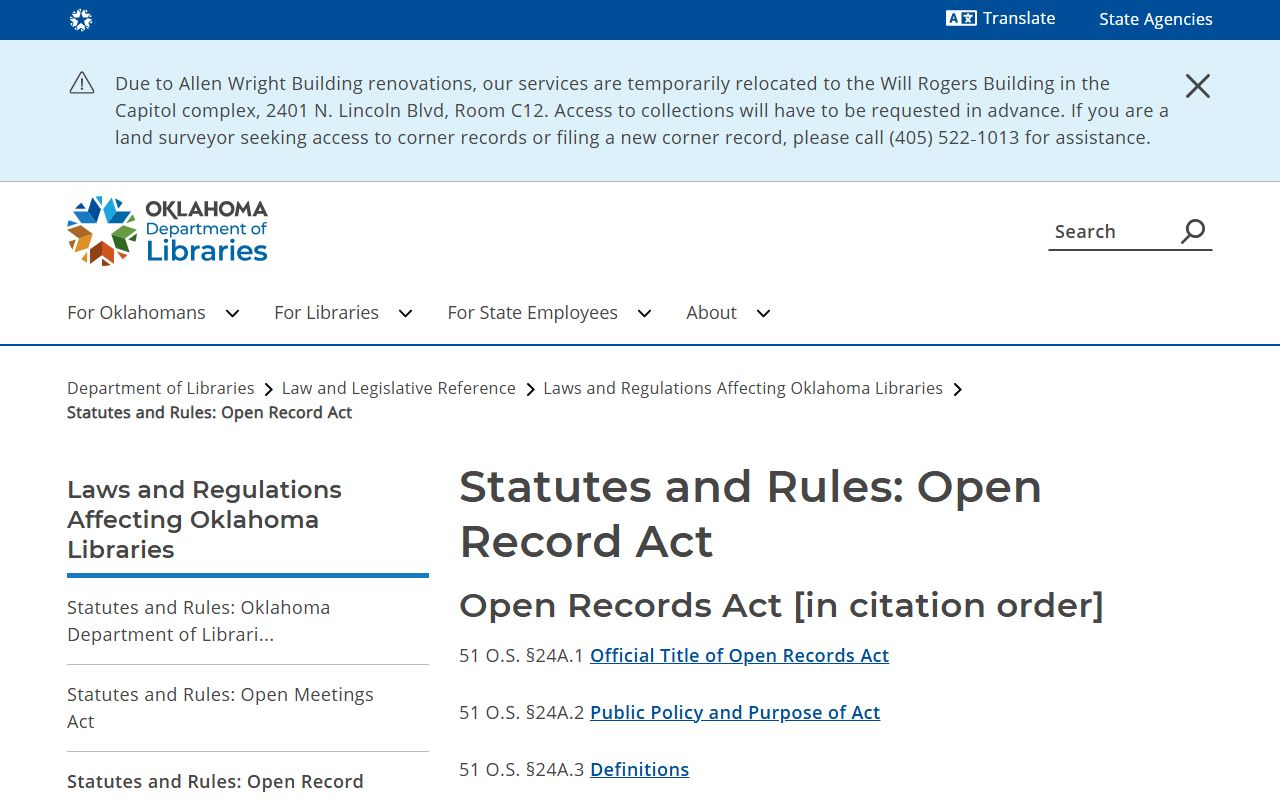
That page is the source to cite when you ask the Court Clerk or another office to inspect a record that is not posted online.
For the underlying statutes and court rules, the state publishes everything in one searchable place. The Official Oklahoma Statutes portal carries the Open Records Act, the First Judicial District rules that apply to Texas County, and the confidentiality statutes for juvenile and adoption files.
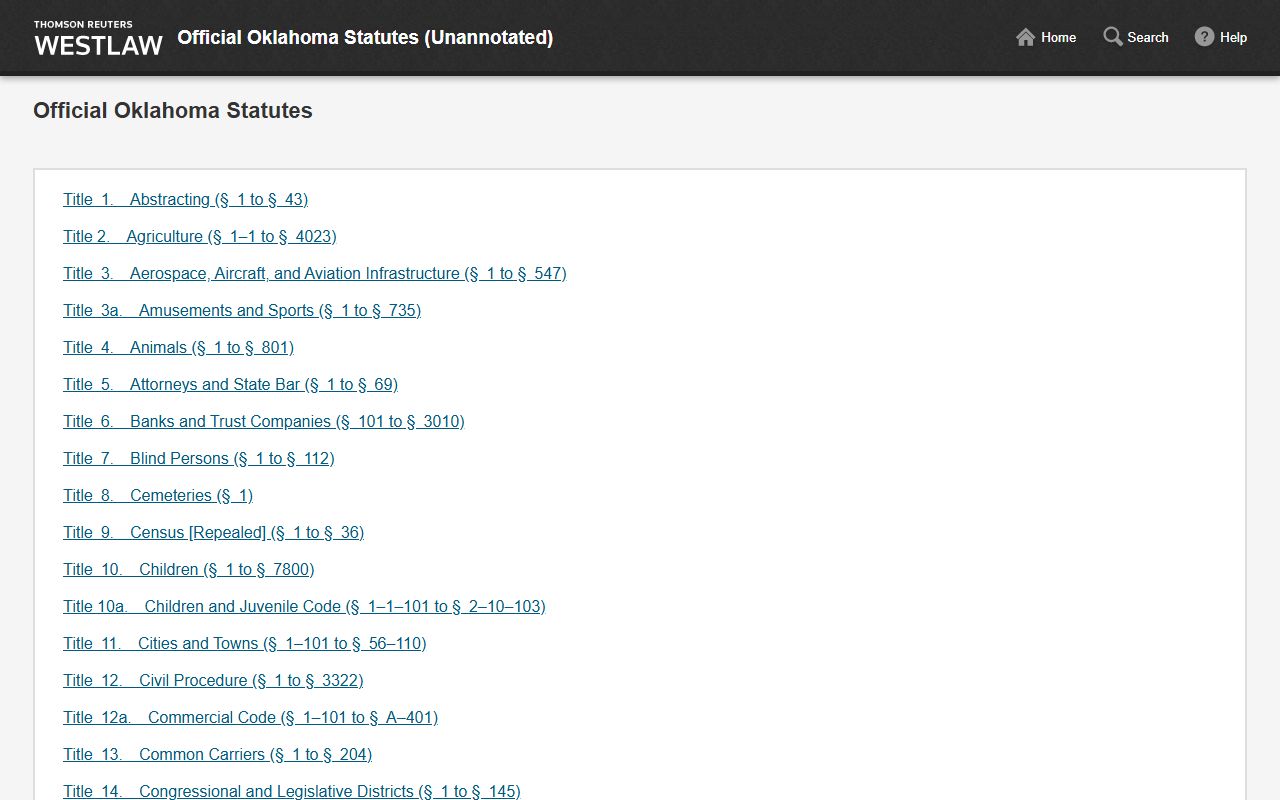
Searching the portal by title and section is the fastest way to confirm a citation before relying on it.
Note: Online dockets are convenient, but they do not replace the clerk's official record, and certified copies come from the Court Clerk rather than a screenshot.
Records That Are Sealed or Confidential in Texas County
Some Texas County records sit outside ordinary public access by law. Juvenile records are generally confidential under Title 10A. Adoption hearings and files stay confidential unless a court orders disclosure for good cause. Mental-health case types may appear in a case-type list, yet their details are usually withheld because they involve medical and capacity information. Once a case is sealed or expunged, public internet access and routine clerk access can be removed. Court rules and e-filing notices also flag Social Security numbers, financial-account numbers, dates of birth, addresses, and the names of minor children as protected identifiers.
The Oklahoma Court of Criminal Appeals explains how its online case search handles these identifier issues. Its Rule 2.6 page describes the OSCN case search and the personal-identifier concerns that come with public docket access.
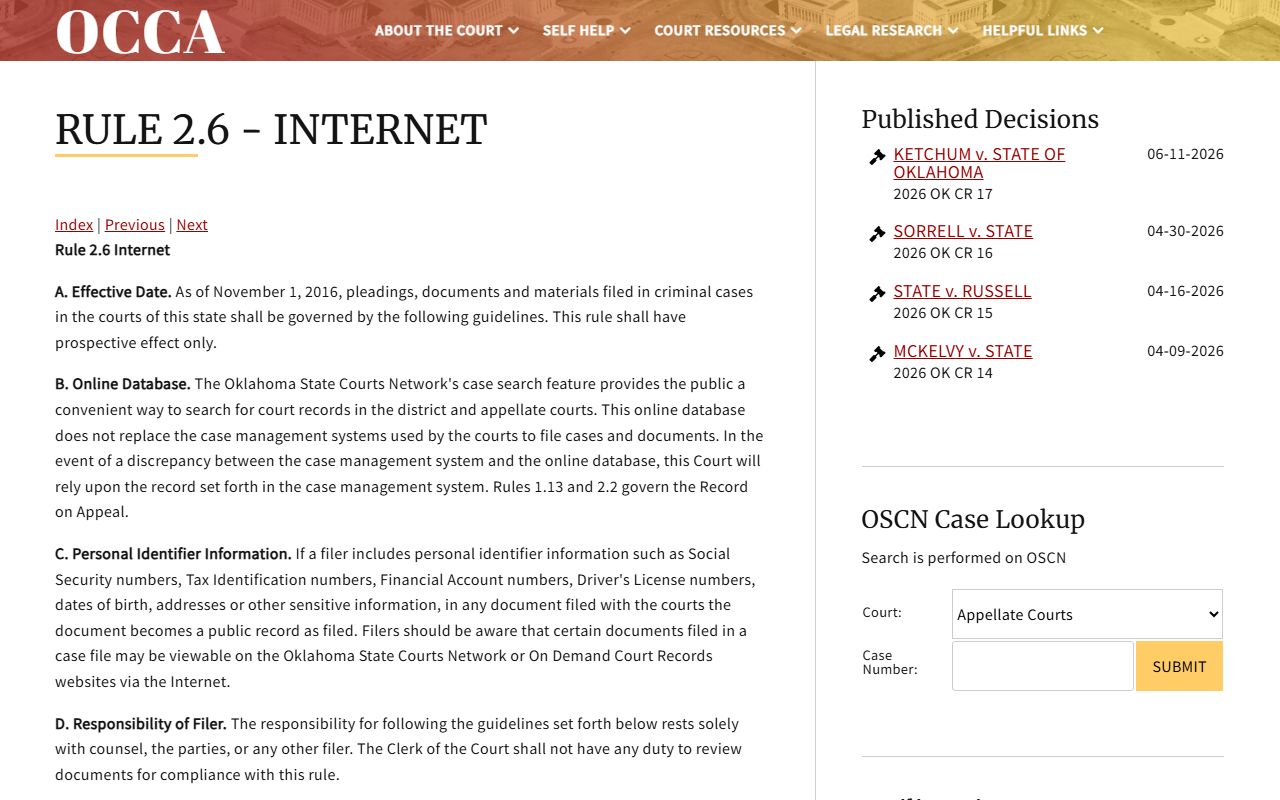
That rule is a useful read before you assume a name or number will appear in the public index.
Sealing a record is a court process, not a clerk favor. The OSBI expungement page states that the agency cannot pre-approve eligibility and points to the categories in 22 O.S. § 18(A). A person seeking expungement identifies the case number, disposition, date, and agency record, files the proper petition in the District Court tied to the case, and gives notice to the agencies that may object. If a judge grants the order, it is served on the Court Clerk, law enforcement, and OSBI so each can update its records.
Requesting Records from the Texas County Court Clerk
When a record is not online, or when you need a certified copy, the Texas County Court Clerk is the office to reach. M. Renee Ellis serves as Court Clerk and keeps the permanent District Court file, the appearance docket, and filed court-reporter transcripts. The office takes requests in person at the courthouse counter, by mail, by phone, and by email. Older cases, recently filed matters, sealed files, and missing documents are exactly the items a counter visit or a call can resolve when the portal comes up empty.
Texas County Court Clerk
M. Renee Ellis
319 N Main St., Suite 301
Guymon, OK 73942
580-338-3003
Hours: 8:00 a.m. to 5:00 p.m.
Certified copies matter. An uncertified docket printout is fine for reference, but courts, agencies, and many institutions accept only a copy certified by the Court Clerk. Order certified copies directly from the office, not from a third-party site.
Two clerks split the work in Texas County, so the office you need depends on the record. Court cases, divorce files, probate, marriage licenses, and District Court traffic go through the Court Clerk. Deeds, mortgages, liens, and other land instruments are recorded by the Texas County County Clerk, a separate elected office. Picking the right counter the first time saves a trip.
Federal Court Records Tied to Texas County
Not every case from the county lands in the courthouse on Main Street. Federal charges, federal civil rights claims, diversity suits, and bankruptcy filings from Texas County are handled by the U.S. District Court for the Western District of Oklahoma. Those files are not in ODCR or OSCN. The official access system for federal appellate, district, and bankruptcy records is PACER, which charges under the federal fee schedule with limited waivers.
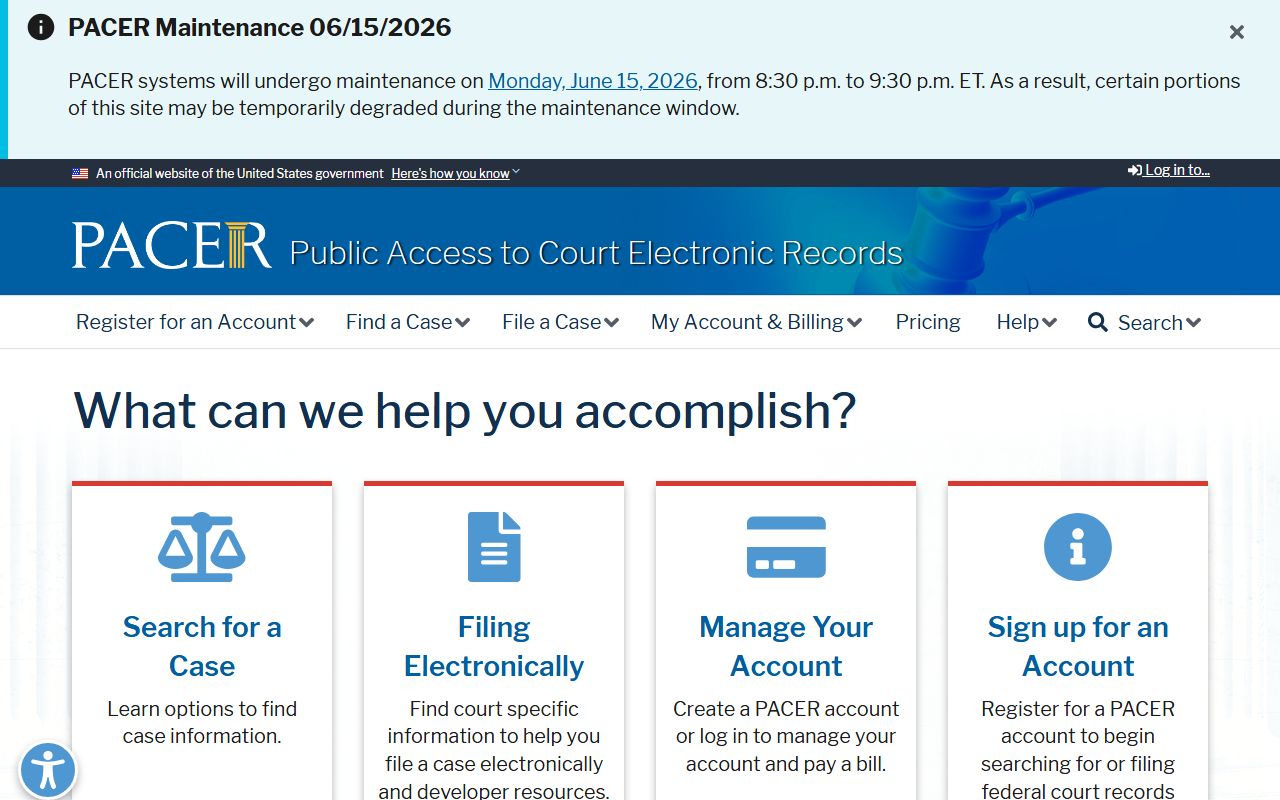
A PACER account is the route to pull a federal docket or filed document for any case connected to the county.
For opinions and many dockets at no cost, a free alternative exists, though it is not the official court record. CourtListener publishes federal opinions and some docket materials gathered from the courts.
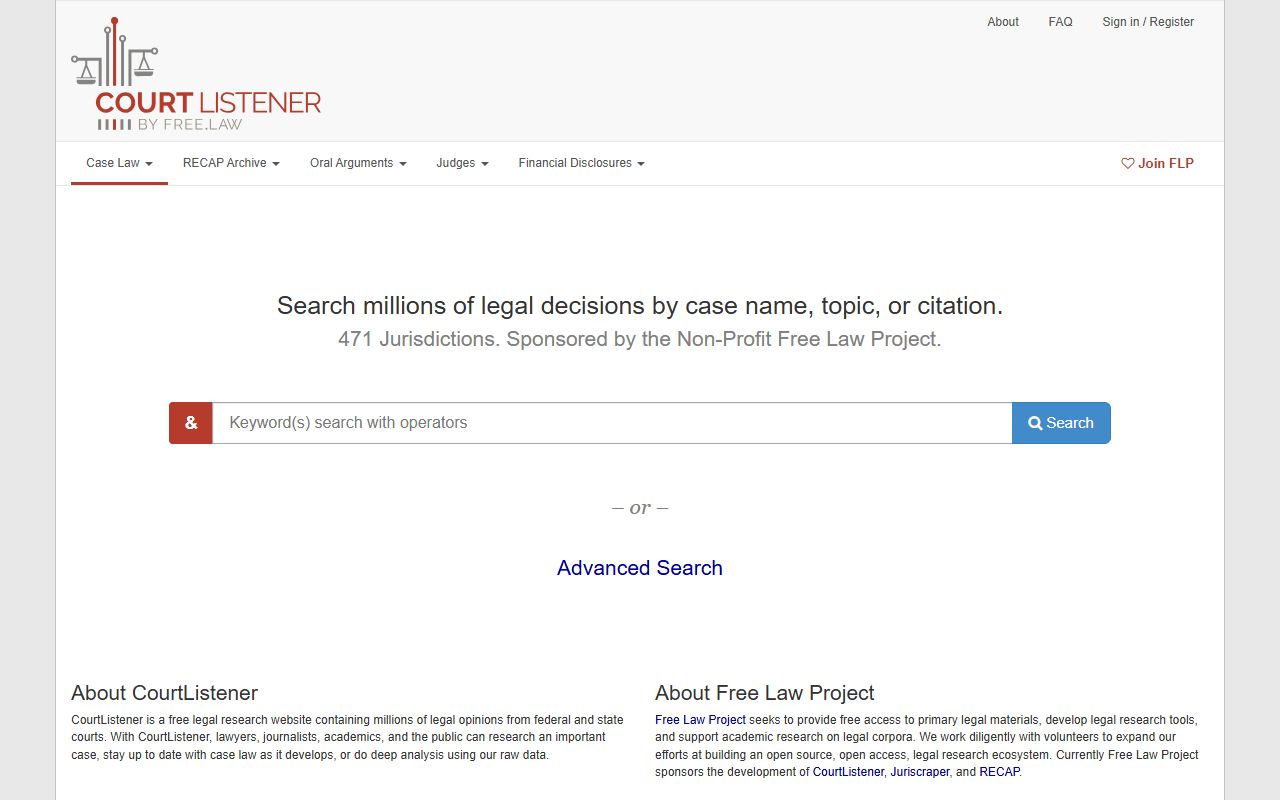
It is a strong free starting point for research, but a certified or official federal record still comes through PACER and the clerk of the federal court.